-
 JanuaryAn exciting year for space exploration kicked off with the news that the Beagle 2 spacecraft, missing since 2003 and presumed destroyed, had been found intact on the moon after 11 years. Elsewhere, Elon Musk’s first attempt to land a reusable rocket failed (although he would succeed by the end of the year), Kepler 438b, the most Earth-like planet yet discovered held out hope for alien life and a new study suggested that two-thirds of adult cancers might be down to ‘bad luck’ rather than genes.Photograph: -/AFP/Getty Images
 -
 FebruaryMPs and peers voted to make Britain the first country in the world to permit the use of “three-person IVF” to prevent incurable genetic diseases. The month’s other science sensation was #TheDress: was it blue and black or was it white and gold? It’s all to do with your brain’s colour constancy.Photograph: Alamy
 -
 MarchArchaeologists worldwide expressed horror at reports of Isis/Daesh looting and razing ancient heritage sites, which culminated in the destruction of Palmyra. In happier news, it turned out that gold in faeces “is worth millions and could save the environment”.Photograph: -/AFP/Getty Images
 -
 AprilA stand-out month for dinosaur fans, with the discovery of “bizarre” Jurassic dinosaur Chilesaurus diegosuarezi (left), new bird/bat dinosaur Yi qi and the possible resurrection of the brontosaurus - well, the genus, at least. There was also excitement as the internet went maths-crazy over a fiendishly difficult maths question for Singapore schoolkids and astronomers discovered that the largest known structure in the universe is ... a big hole. A controversial world first was also performed by Chinese scientists, who genetically modified human embryos, prompting worldwide debate.Photograph: Gabriel L o/PA
 -
 May Scientists discovered that pandas are, in fact, poorly adapted for digesting bamboo, offering more insights into why the species is endangered and unleashing a tide of “why do we bother keeping them alive?” comments across the internet. In space news, mild panic was caused by the fact that a Russian Progress cargo spacecraft was set to crash to Earth, althoughthe chances of being hit were extremely remote.Photograph: Xu Chang/Xinhua Press/Corbis
 -
 JuneA rollercoaster of a month for science. On the positive side, the Rosetta mission’s Philae lander “woke up” and started to communicate with the European Space Agency for the first time in seven months. A teenager on work experience discovered a new planet and a new study showed that chimps like to cook. On the down side, possibly the biggest scientific controversy of the year was kicked off by Nobel scientist Tim Hunt telling a conference that women in laboratories
“fall in love with you and when you criticise them, they cry”, which he later claimed was a poorly-judged joke.Photograph: ESA/PA -
 JulyThis month’s main event was the Nasa New Horizons flypast of Pluto, which yielded unprecedented pictures and information about the dwaft planet. Physicists also had an exciting July with the discovery of new particles called pentaquarks at the Large Hadron Collider. But the truly good news came from Guinea, where an ebola vaccine trial proved 100% successful.Photograph: -/AFP/Getty Images
 -
 AugustDespite it being theheight of summer, one of this month’s biggest stories came packing in ice: Antarctic scientists confirmed the existence of cosmic neutrinos – ghostly particles that have traveled from the Milky Way and beyond. We also discovered the reason for Knut the polar bear’s untimely demise and a study delivered a bleak outlook on the validity of psychology experiment results.Photograph: IceCube Collaboration
 -
 SeptemberOrdinarily, the discovery of the fossils of what may be a new ancient species of ancient human, Homo naledi, would be the biggest storey of the month. However, the discovery of water on Mars made this an absolutely blockbuster month.Photograph: NASA/Reuters
 -
 OctoberProcessed meat hit the headlines this month, as the WHO declared that it ranks alongside smoking in terms of cancer risk. However, it was a cheerier month for Tomas Lindahl, Paul Modrich and Aziz Sancar, who shared the Nobel chemistry prize, for Takaaki Kajita and Arthur McDonald, winners of the Nobel physics prize and William C Campbell, Satoshi Ōmura and Tu You, who shared the Nobel prize in medicine. There was fevered space speculation, as a possible “alien megastructure” was spotted by astronomers and “Spooky the asteroid” gave Earth a mild Halloween fright.Composite: Alamy
 -
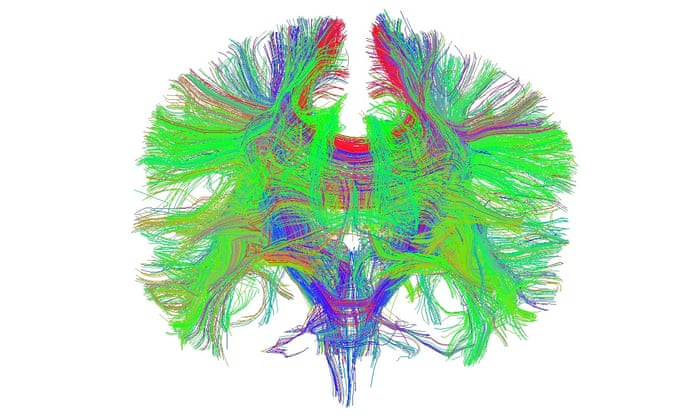 NovemberLittle grey cells were very much in the news this month, as it was revealed that smoking high strength cannabis may damage nerve fibres in the brain and a new study showed that men and women’s brains may not be so different after all. A controversial genetic technique that could create “anti-malarial mosquitoes” was also revealed.Photograph: Institute of Psychiatry
 -
Thursday, 24 December 2015
2015: the year in science - in pictures

Subscribe to:
Post Comments (Atom)
No comments:
Post a Comment